
Why You Still Feel Tired After Sleep
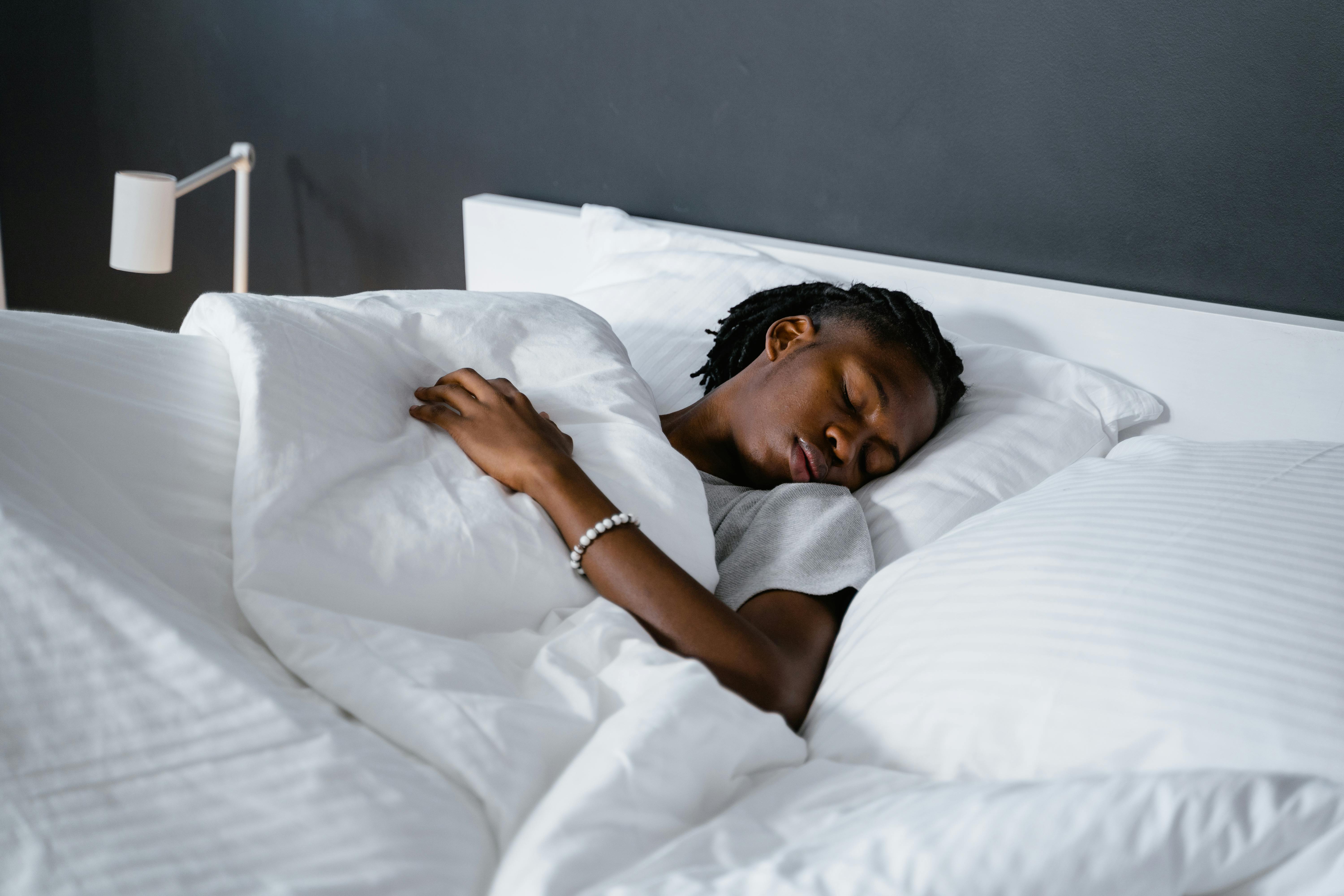
The average person spends ~4 hours per day feeling tired . That's nearly 1,500 hours per year (New York Post).
And 58% of people say this fatigue interferes with enjoying life.
Many people try to solve fatigue by increasing time asleep. They go to bed earlier, change the mattress, cut caffeine, and make the bedroom darker. Yet they wake up feeling the same.
The issue in these cases is usually not how long you sleep but what happens while you sleep. The extent to which your brain has been able to recover.
Sleep is a Process, Not a Set Block of Time
Sleep unfolds through a series of neural states, known as sleep stages. Light sleep stages disengage awareness whereas deep, slow-wave sleep supports cellular repair, immune function, and autonomic reset and recovery.
When our nights contain less slow-wave, deep brain activity, they fall short on the restoration we need.
For adults sleeping 7–9 hours, deep sleep need is up to 110 minutes of per night (Sleep Foundation).
So what can interfere with getting to and staying in deep sleep long enough to restore your system?
Nervous system state.
Many daytime activities keep the sympathetic nervous system (fight or flight) elevated as we head towards bedtime: screens, late work, late meals and emotional stimulation all sustain body activity and vigilance. The brain can remain in faster, evaluative patterns that block descent into the slow brainwave oscillations that we need for true recovery.

A lot of sleeplessness advice focuses on latency (sleep onset time) or duration in terms of pure hours achieved. The pressure is put on timing rather than setting the stage for deep sleep by winding down the nervous system.
How can we improve daytime fatigue by getting our nervous system primed for deep sleep?
Sound Nervous System Support
The brain synchronises naturally to rhythmic input. Pre-bedtime sound containing embedded rhyhms can enhance slow brainwaves and the physiological signatures of restorative sleep (Ngo et al., 2013).
Studies have linked such sounds to measurable changes in immune-supportive hormonal function that accompanies deep sleep (Besedovsky et al., 2017).
And a systematic review of one such sound, binaural-beats, found it can produce reliable shifts in brain states and in autonomic markers such as heart-rate variability that support deep sleep (Ingendoh et al., 2023).
At Audicin our BB audio does not force sleep. It reduces the neurological resistance arising from nervous system overstimulation that can prevent sleep from deepening.
When first using Audicin before bed people often describe the difference not as falling asleep faster, but as waking with a sense of deep restoration.
A subjective clarity that reflects improved recovery rather than increased duration.
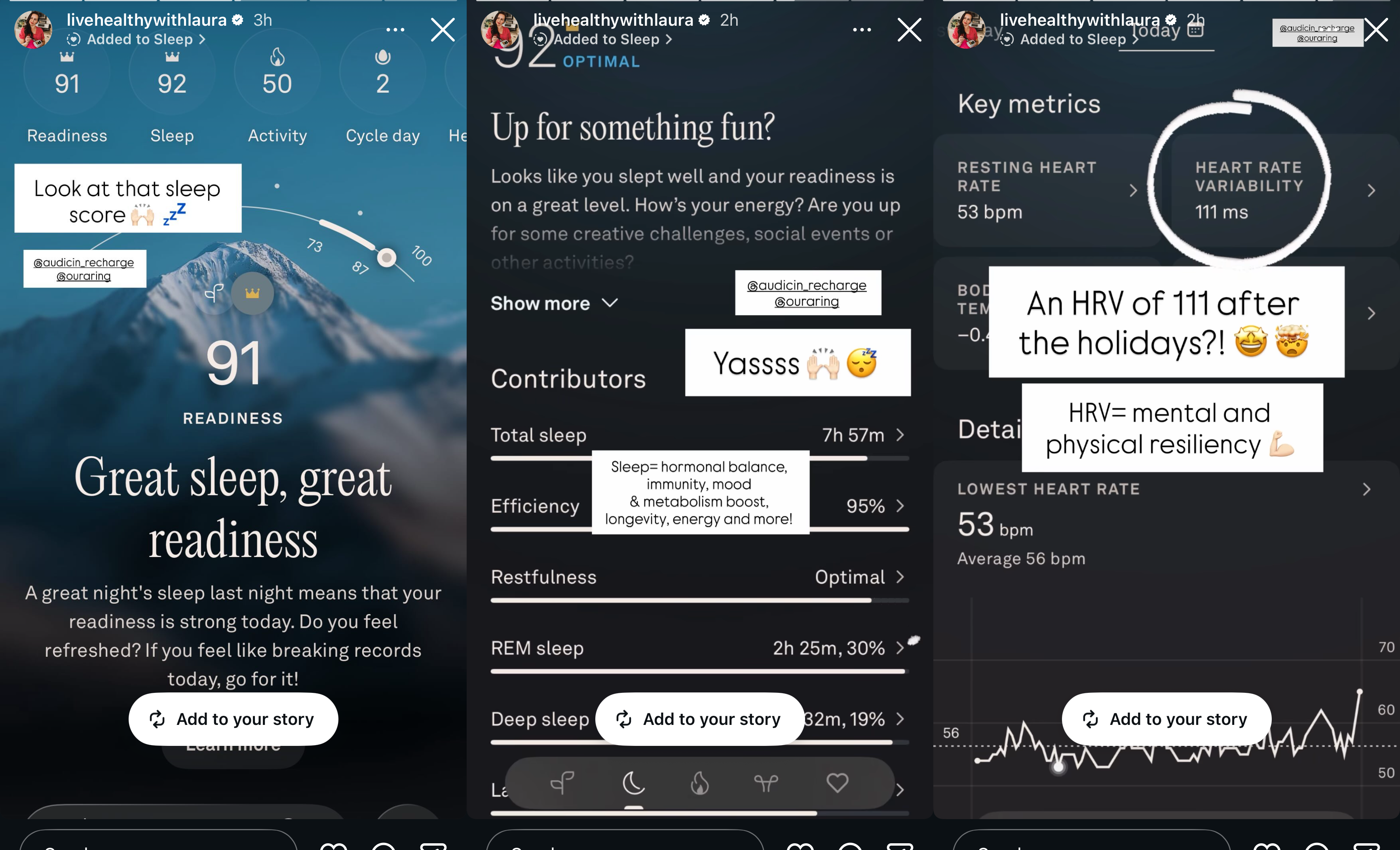
During her recent trial of Audicin, the wonderful Laura Heflin reported these results as part of her excellent podcast Live Healthy with Laura
Consistency Matters
The nervous system responds to repetition which is why predictable, nightly patterns/ routines allow the brain to anticipate and rehearse the transition to deep sleep. That is the logic behind structured Audicin sleep journeys that help you prepare for restorative rest.
What Usually Changes First
- People report clearer mornings.
- Waking is less abrupt, cognitive clarity returns sooner, and subjective recovery improves even in cases when total sleep time is unchanged.
- Those changes reflect more time spent in restorative neural states rather than extra hours asleep.
One Small Change to Feel a Big Difference
If you suspect your mornings are heavy with fatigue because nights are not restorative, try a single change.
Listen to Audicin for 10-20 mins whilst you go about your normal pre-bed routine. This will support small shifts into sleep descent that can produce measurable changes in morning recovery over time.
Audicin pre-sleep and sleep journeys (as well as our new comfortable Audicin sleep headband) are designed to make deep sleep transition consistent enough to observe.
Audicin does not sedate you or add hours to your night; it is designed for effortless integration into your routine, to make the neural process of recovery easier to complete whilst you sleep. Try it for a few nights and notice the difference to your mornings.
References
Ngo, H.-V. V., Martinetz, T., Born, J., & Mölle, M. (2013). Auditory closed-loop stimulation of the sleep slow oscillation enhances memory. Neuron.
Besedovsky, L., Ngo, H.-V. V., Dimitrov, S., Gassenmaier, C., Lehmann, R., & Born, J. (2017). Auditory closed-loop stimulation of EEG slow oscillations strengthens sleep and signs of its immune-supportive function. Nature Communications, 8, 1–12.
Ingendoh, R. M., et al. (2023). Binaural beats to entrain the brain? A systematic review of the effects of binaural beat stimulation on brain oscillatory activity, and the implications for psychological research and intervention. Frontiers / PubMed Central.