
Inside the Focused Brain: How Binaural Beats Improve Attention and Reaction Speed

Focus is a function of how attentional brain networks coordinate in real time. Recent brain research confirm that binaural beats can influence this coordination, leading to measurable changes in processing speed, attentional allocation, and network efficiency.
These neural effects provide a scientific basis for using Audicin to support sustained high-performance focus.
What happens in the brain when we focus ?
Sustained focus under pressure depends on how efficiently the brain organises itself moment to moment: where it sends our finite resources and how quickly they are sorted and allocated. Think of an experienced Las Vegas card dealer. Faster than the eye, the cards are shuffled, sorted and dealt. That is how a well-focused brain deals with the minute-by-minute challenges we face.

When attentional systems are stable and well-coordinated, performance feels controlled and deliberate. We are the masters of our deck of cards. When they are not, even highly trained individuals experience distraction, slower reaction times, and cognitive fatigue.
Recent neuroscience research now demonstrates that binaural beats can measurably influence the neural systems that support attentional performance (Melnichuk et al., 2025; Mujib et al., 2026).
What’s emerging is a clearer picture of how attention can be shaped through positive changes in the activity of the brain systems that determine where and how our cognitive resources are directed. And as a result, how focused we feel on the job at hand.
How Attention Is Implemented in the Brain
Attention is not found in a single brain region. Instead, it emerges from coordinated activity across distributed neural networks, particularly frontal–parietal systems (comprised of the adjacent frontal and parietal lobes) that regulate goal-directed focus, sensory prioritization, and cognitive control.
These networks must communicate efficiently for attention to remain stable under operational load.
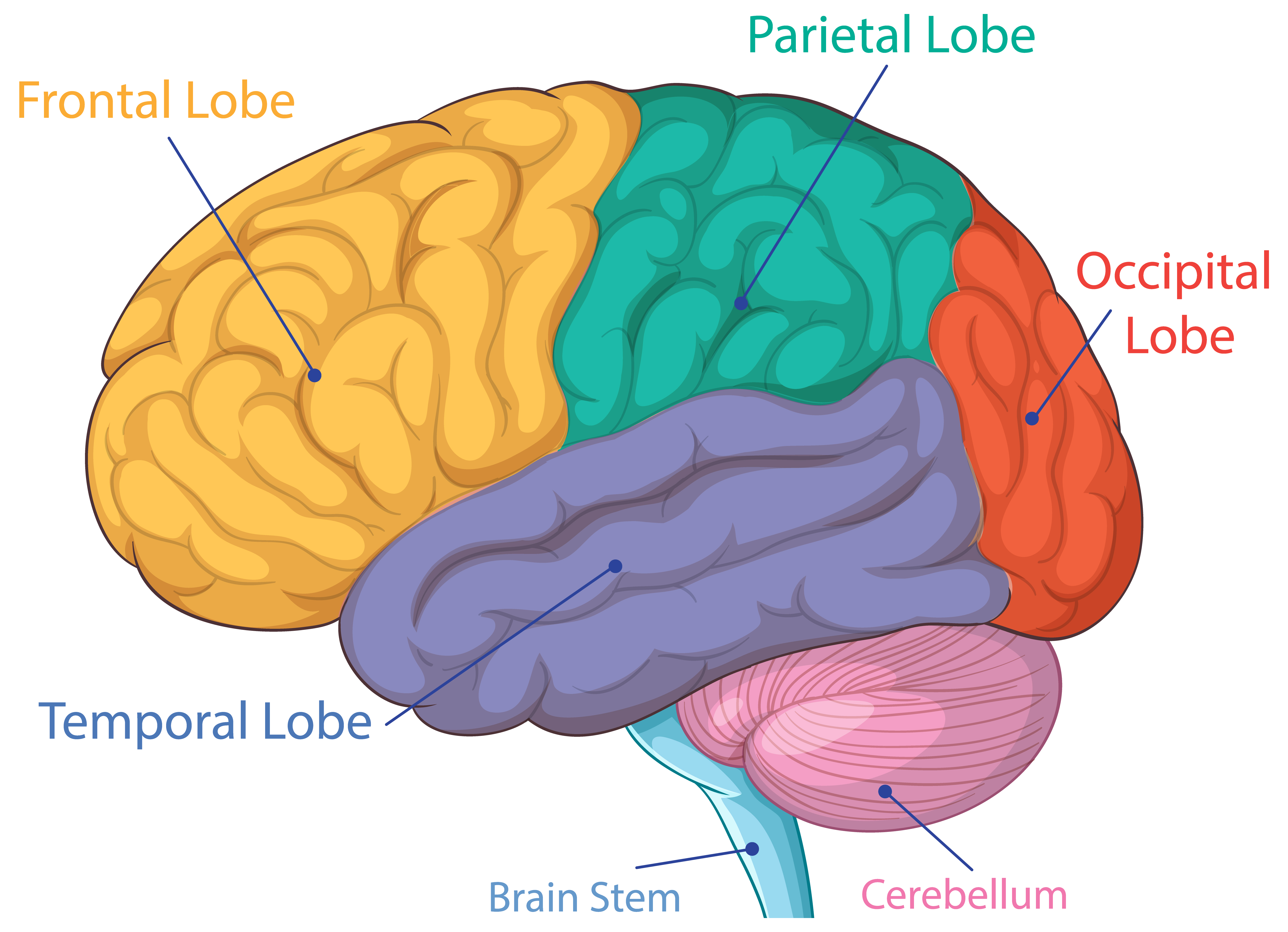
When communication within these brain systems becomes inefficient or desynchronized, performance degrades.
When coordination improves, the brain processes relevant information faster and with less metabolic cost, an essential requirement for sustained high performance.
What Binaural Beats Can Do to Help Your Brain Focus
* full references and links at the end
1. Gamma Frequencies and Performance Output
Recent neurological studies provide direct evidence that binaural beats can influence this brain network-level organization. In a controlled study using electroencephalography (EEG), gamma-frequency binaural beats significantly improved attention-related task performance (Melnichuk et al., 2025).
Gamma-band activity is closely associated with high-speed information integration and working memory, processes that are critical during complex, time-sensitive tasks.
The Audicin app allows you to search for Gamma-band audio right from the homepage. Just click 'Choose Goal' and select Gamma to see the wide range of journeys or songs available at this frequency.
2. Network Efficiency in Frontal–Parietal Circuits
A subsequent study in 2026 strengthened this finding by linking performance gains to measurable changes in brain network efficiency (Mujib et al., 2026).
Specifically, improvements were associated with enhanced efficiency across frontal–parietal networks. These unique brain rhythms play a central role in coordinating large-scale neural communication during sustained attention and cognitive control.
Importantly, this coupling between behavioural improvement and objective EEG reorganization provides evidence of real neural modulation, rather than placebo or expectancy effects.
3. Faster Processing and Better Allocation of Attention
Longer-term exposure further supports this interpretation.
In a month-long daily listening study, participants demonstrated faster reaction times alongside consistent enhancements in attentional brain markers, including increased P300 amplitude and reduced P300 latency (Chockboondee et al., 2024).
The P300 is a well-established brainwave marker of attentional resource allocation and cognitive processing speed. Changes in this signal indicate that the brain is detecting, prioritizing, and responding to task-relevant information more efficiently. Your ability to juggle demands is maximised and on fire.

Why This Matters for Defense and High-Performance Professionals
For DoD personnel, pilots, analysts, and other mission-critical operators, performance failures can arise when attentional systems degrade under fatigue, stress, or information overload. Even when all the training is there and the will to perform is strong.
The evidence suggests that properly engineered binaural beats, such as those made by Audicin, can support attention by improving neural efficiency within attentional control networks. Rather than artificially stimulating arousal, the effect reduces wasted neural processing and supports faster, more stable attentional engagement.
Systematic reviews and meta-analyses reinforce this conclusion. They report small-to-medium effects of binaural beats on attention and memory, with effect sizes increasing when studies employ sufficient exposure duration, frequency-matched protocols, and verified binaural audio delivery (Basu et al., 2023).
When good methodological conditions are not met the observed benefits diminish. This underscores that precision in design and delivery is essential.
From Research to Real-World Application with Audicin
At Audicin, our focus is translating validated neuroscience like this into enhanced listening experiences designed for professionals who must enter focused, high-performance states deliberately and reliably. The goal is supporting the brain’s natural attentional architecture under real-world demands.
Below are 4 Audicin FOCUS journeys that align directly with the neural mechanisms described above. My personal favourite is the last one:
- Work with the Flow - Flow is the ultimate state of productivity. Loose all track of time, become absorbed and engaged in your task. Use this optimal state of attention to fly through the to-do list.
- Reach that Goal - Got a task that you have been avoiding? A lengthy to-do list ? Boost those brainwaves, increase your creativity and problem solving so you can exceed your target, and then give your hardworking brain a well-deserved rest.
- Stimulate my Mind - Seeking inspiration, problem solving and creative expression? Experience the highest brain waves for complex thinking, ideal for working towards a solution or easing through a block.
- Clear the Brain Fog - In a world that’s constantly on the move, it’s easy for the mind to become overwhelmed and clouded. With so many thoughts competing for attention, everyday tasks can start to feel like an impossible challenge. It’s time to pause, breathe, and give your brain the space it needs to reset. Featuring soothing binaural beats and frequencies scientifically proven to promote mental clarity, this collection will help you calm the noise and restore focus.
Closing Perspective
Binaural beats are not a shortcut to performance, nor are they a replacement for training or discipline. They are best understood as a neural tuning tool, one that can support attentional efficiency when engineered and applied with scientific rigour.
For professionals operating where attention is mission-critical, understanding what is happening in the focused brain is essential. The emerging evidence indicates that binaural beats, when precisely designed, can play a meaningful role in supporting focused performance under operational conditions.
References
• Melnichuk, A., et al. (2025). Gamma-frequency binaural beats enhance attention-related performance: An EEG study. Scientific Reports.
https://doi.org/10.1038/s41598-025-88517-z
• Mujib, R., et al. (2026). Binaural beats modulate frontal–parietal network efficiency and improve attentional performance. Frontiers in Neuroscience.
https://www.frontiersin.org/journals/neuroscience/articles/10.3389/fnins.2025.1705210/full
• Chockboondee, K., et al. (2024). Long-term binaural audio exposure enhances attentional ERP markers and reaction time. Scientific Reports.
https://doi.org/10.1038/s41598-024-68628-9
• Basu, A., et al. (2023). Effects of binaural beats on cognition: A systematic review and meta-analysis. Neuroscience & Biobehavioral Reviews.
https://pubmed.ncbi.nlm.nih.gov/35842538/